Construction website design that brings in the right projects
I build websites for contractors and builders that show your work, your credentials and the areas you cover, so the right clients ask for a quote.
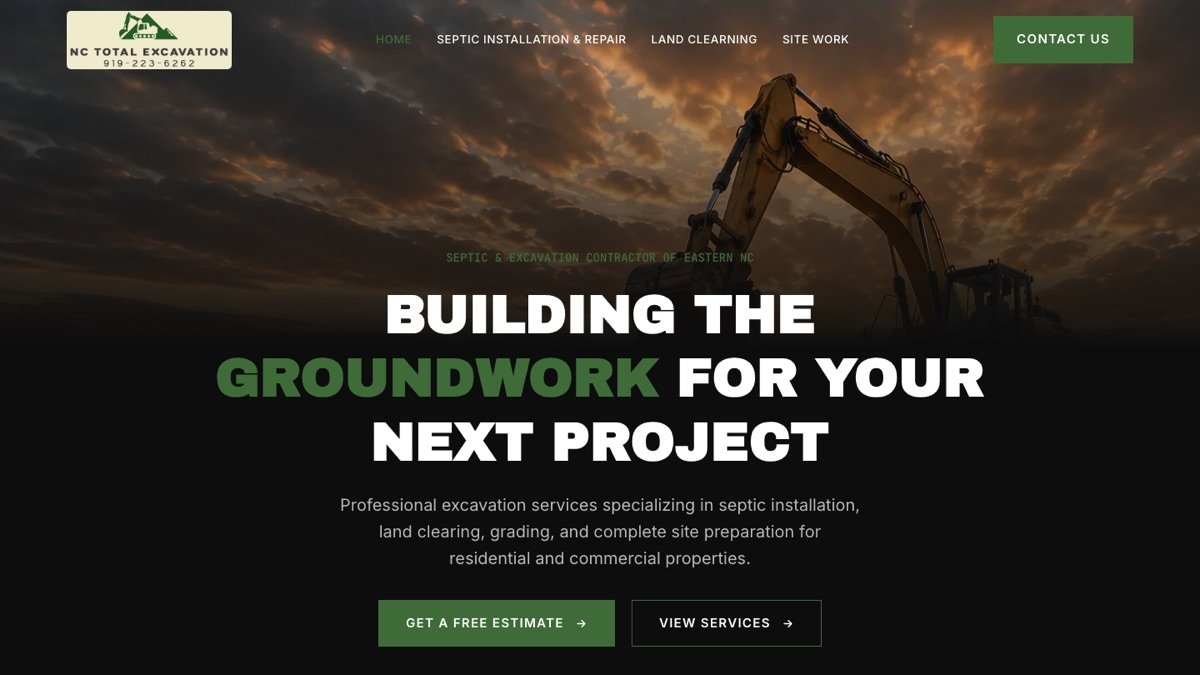
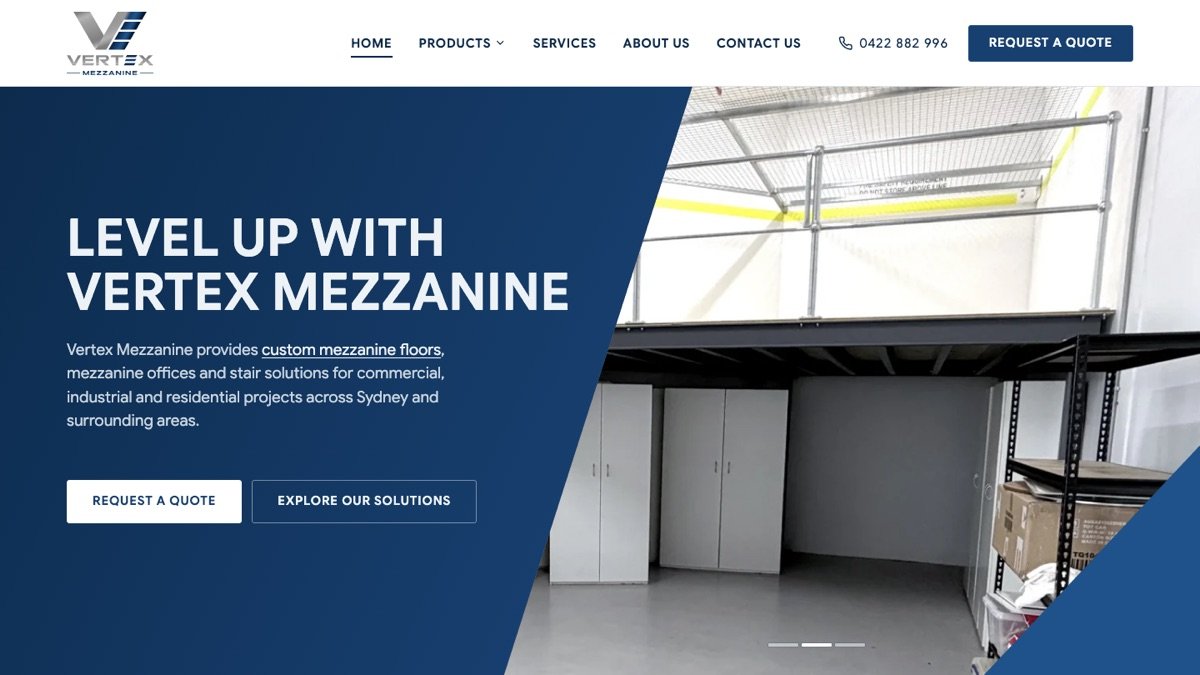
Including Vertex Mezzanine in Sydney, GP Coatings in New South Wales and NC Total Excavation in North Carolina.
Buyers check you out before they call
A homeowner planning an extension and a builder choosing a subcontractor look for the same things first: work like theirs, the right credentials and proof that you cover their area.
Here are six problems I see on construction websites, and how I fix each one.
- Problem
Found only by your name
Most contractor websites show up only when someone types the company name. Buyers search for the job and the area instead.
The fixService and location pages built from keyword research, so you appear for “mezzanine floors Penrith”, not just your name.
- Problem
A photo wall, not a portfolio
Every job sits in one mixed gallery. A school builder has to scroll past kitchens and decks to find work like theirs.
The fixProjects with their own pages, filterable by sector or job type, each with the location, scope and photos.
- Problem
Every service on one page
Excavation, septic and land clearing crammed onto one page rank for none of them, and visitors can’t tell what you specialise in.
The fixA page for each service you want work for, written in the words clients use when they search.
- Problem
Credentials buried in a PDF
Builders and commercial clients check licences, insurance, safety records and accreditations before they shortlist a contractor.
The fixA clear credentials page, with licences, insurance and safety shown beside every quote form, ready for a prequalification check.
- Problem
Plans sent separately
Construction quotes start with drawings. A plain contact form means clients email plans later, and many never do.
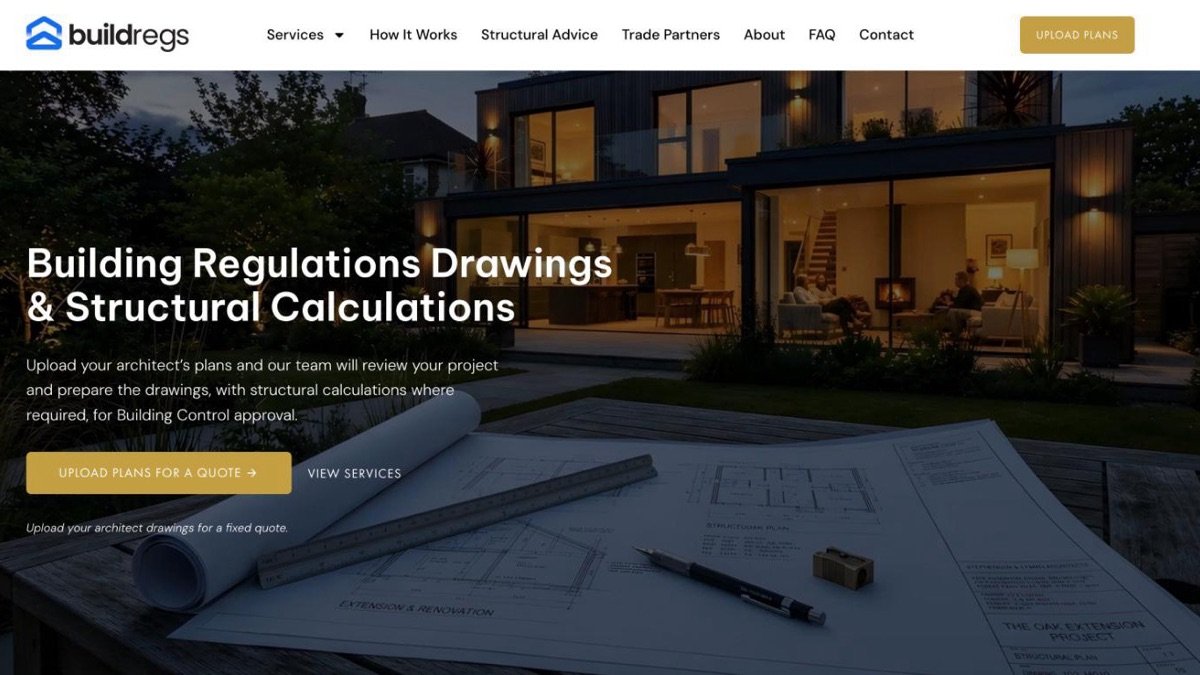
The fixA quote form that takes drawings and photos, so you can price the job from the first message, like BuildRegs.
- Problem
Looks smaller than the work
A commercial client compares contractors on the website first. A dated template makes a firm that builds schools look like a one-man band.
The fixA design that matches the size of your projects: real site photography, video and one clear statement of what you build.
Slow pages, hidden reviews and weak calls to action hurt every local business website. I cover those on the website design page, and roofers have their own page.
Everything a construction website needs
- Enquiries on site, not at the deskEvery quote request reaches your phone at once, with the address and job type, so you can reply the same day.
- Video that shows scaleSite and drone footage, compressed to load fast, because 30 seconds of video shows the size of a job better than ten photos.
- Named clients and referencesGoogle reviews for homeowners, and the builders or developers you work for, shown where buyers decide.
- A careers page that hiresEstimators, site staff and apprentices apply through one form, so recruiting stays out of your sales inbox.
- News without writing postsYour LinkedIn updates shown on the website automatically, so it stays current while you are on site.
- Tracking from day oneGoogle Analytics and Search Console set up at launch, so you can see which pages bring in enquiries.
12 new pages, about 4 leads in the first month
Vertex builds mezzanine floors for warehouses and storage units across Sydney. After the new website launched, they wanted to run ads. I suggested trying organic search first: I set up analytics and Search Console, researched what their buyers search for, and added 12 pages.
In the first month, those pages brought in about four leads from Google, without paying for a single click.
View the live website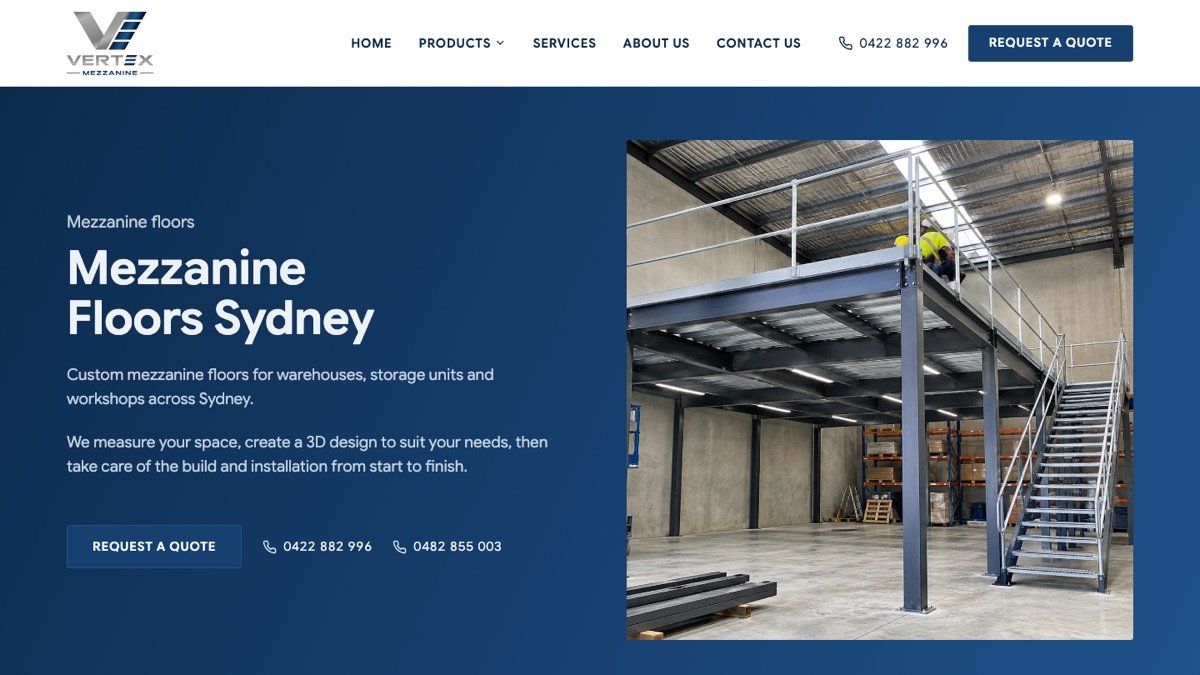
The 12 pages that brought Vertex its first leads
Each page targets one search a buyer actually makes, with real jobs and figures from Vertex rather than the same text with a new place name.
- Sydney pageMezzanine floors across Sydney: what Vertex builds, how it works and how to get a quote.
- 7 suburb pagesMarsden Park, Liverpool, Penrith, Silverwater, Wetherill Park, Eastern Creek and Blacktown, the industrial areas Vertex works in.
- A cost pageWhat a mezzanine floor costs in Sydney, with real figures from jobs Vertex has built.
- 3 product pagesMezzanine offices, storage unit mezzanines and the full product range.
A contractor for tier one builders, with a website that hid its services
GP Coatings paints and fireproofs hospitals, schools and sports grounds for tier one and two builders across New South Wales. The old website had a three-slide carousel, no services on the homepage and every job in one gallery. I rebuilt it with a page for each service, nine project case studies and a projects archive filtered by sector, so a hospital builder sees hospitals.
25 years in business, and about to go offline
Full Measures builds additions, kitchens and outdoor living spaces on the New Jersey shore. Its old website was being shut down, and the domain, hosting and a half-started transfer sat with three different providers. I built the five pages on a temporary address, saved the email records before anything moved, then pointed the domain, so the website went live within two weeks and the business email kept working.
Construction websites I've built
Clear pricing, from $500
No surprises: every construction website gets a fixed price before any work starts, so you know exactly what you're paying.
- A one-page website, a homepage with a quote form built in, from $500
- Five pages, for example a homepage, three service pages and a projects page, from $1,200
- Each project case study, location or extra service page adds to the price, quoted up front
- Redesigning your current website? Book a free 15-minute call and I'll give you an exact, fixed price
- Every website comes with a video guide on how to manage it yourself
- Maintenance is optional and never built into the price
Questions contractors ask about their website
What does a construction company website cost?
Most contractors need more than a homepage: a page per service, a few project pages and the areas you cover.
$500 gets you a one-page website with a quote form.
$1,200 gets you five pages, for example a homepage, three services and a projects page.
Project, location and extra service pages are priced one by one, agreed before work starts.
Most of my work comes from referrals. Do I still need a website?
Yes. People who are referred to you still look you up before they call, and builders check a subcontractor's website before adding them to a tender list. A weak website can lose a job a referral already won.
Can my website bring in leads without paying for ads?
Often, yes. Vertex wanted to start with ads; twelve pages built from keyword research brought in about four leads in their first month instead. Results depend on your market and competition, and ads are still the faster route when you need work this week.
How do I show commercial and residential work on one website?
Give each its own path. Commercial clients see sectors, credentials and named builders; homeowners see services, the areas you cover and reviews. One website, two clear routes from the homepage.
I can't name the client. How do I show the project?
Describe it by sector, location and scope, for example “a 400 m² warehouse mezzanine in Western Sydney”, and use photos without signage. Many builders will also agree to be named if you ask once the job is done.
Can it be ready before a tender or a big pitch?
Usually, yes. Allow around five days for a single page and one to three weeks for five pages; the longest wait is often gathering good project photos. Full Measures was finished inside two weeks.
My domain, hosting and email are with different companies. Can you sort it out?
Yes. I build on a temporary address first, copy your email records before anything moves, and then point the domain, so your website goes live without losing your business email.
Do you work with builders in the UK and Australia?
Yes. BuildRegs is in the UK, and Vertex Mezzanine and GP Coatings are in New South Wales. The website uses your local terms and spelling, like Building Control in the UK and WHS in Australia.
Do you build for excavation, concrete and other trades?
Yes. NC Total Excavation has separate pages for septic installation, land clearing and site work. Any trade works the same way: one page for each job you want more of. Roofers have their own page.
Tell me about your construction business
You'll hear back within one business day with honest advice, a rough timeline and a clear price. Not ready yet? Get a free website report first.